

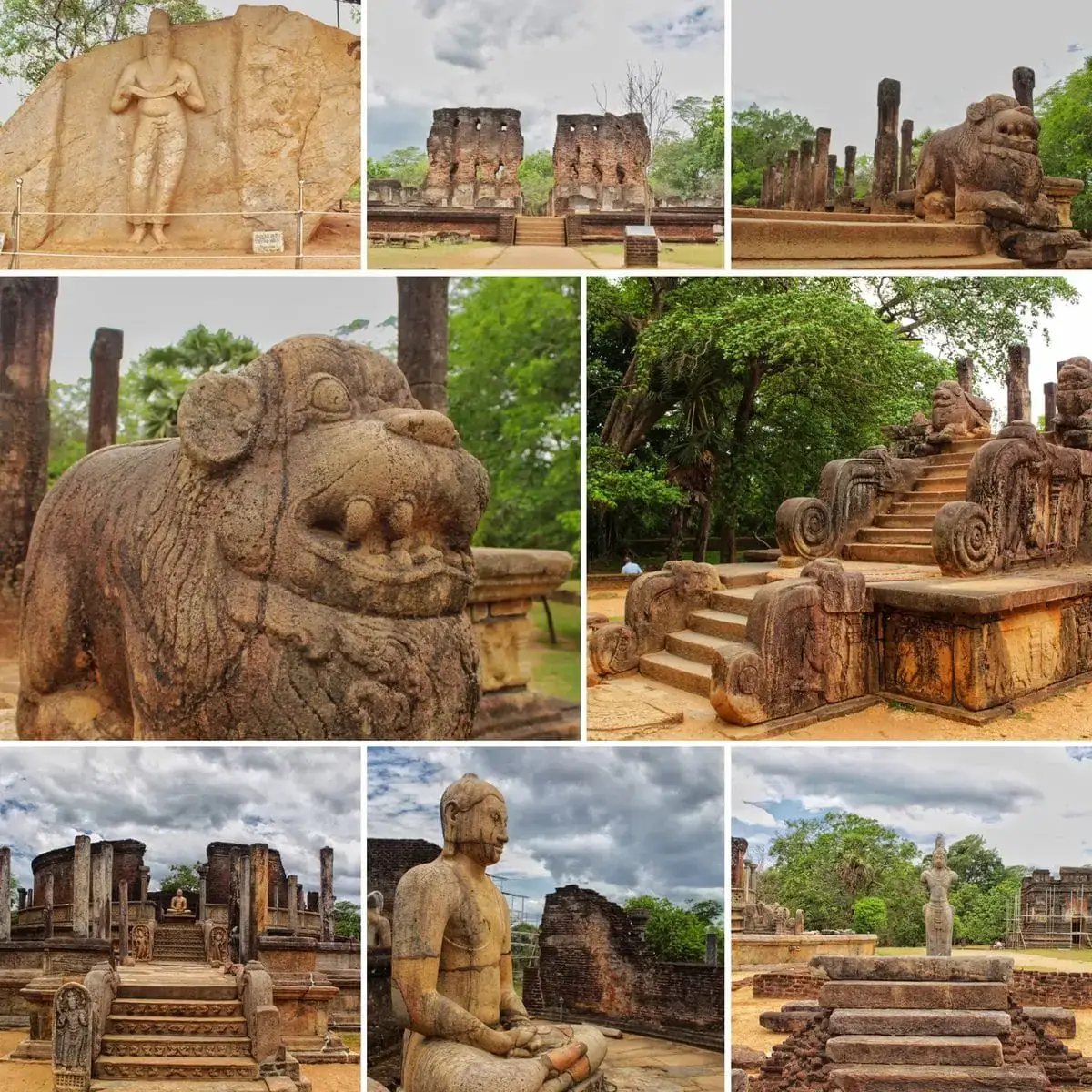
Polonnaruwa
Mediaeval ruins & royal splendour
About Polonnaruwa
Polonnaruwa was the second capital of Sri Lanka and is one of the best-planned archaeological sites in Asia. This UNESCO World Heritage Site features remarkably preserved royal palaces, sacred quadrangles, giant Buddha statues, and an elaborate ancient irrigation system.
History of Polonnaruwa
After the fall of Anuradhapura, Polonnaruwa became the capital in the 11th century AD. It reached its zenith under King Parakramabahu I (1153–1186 AD) who constructed the vast Parakrama Samudra reservoir and unified the island under a single kingdom for the first time.
What Visitors Can See
Things to Do
Gal Vihara
Stand before the magnificent rock-cut Buddha statues - the finest examples of ancient Sri Lankan sculpture
Archaeological Tour
Cycle the well-maintained paths through the UNESCO-protected ruins of the ancient royal city
Parakrama Samudra
Marvel at the immense ancient reservoir - one of the greatest feats of engineering in the ancient world
Sunset Photography
Photograph the ruins bathed in golden hour light with the great reservoir glittering in the background
Photo Gallery
Visit Polonnaruwa
Location
North Central Province
Best Time to Visit
May – Sep
Dry season - comfortable temperatures for exploring ruins